Join Jewish Women International in a live webinar presented by Leslye Orloff, on March 4th from 12-1pm ET. The webinar will focus on immigrant women and domestic violence. Registration is $25 for non-members.
Categories
Join Jewish Women International in a live webinar presented by Leslye Orloff, on March 4th from 12-1pm ET. The webinar will focus on immigrant women and domestic violence. Registration is $25 for non-members.
In my continuing quest to provide better access to free CME/CEUs for FHO readers, I decided to trawl through Medscape tonight and round up 20 offerings that can be completed quickly and easily. A couple caveats, though: 1.) not all of them are for RNs–physician and midlevel only CEs are marked accordingly; 2.) these things expire, and some more quickly than others [a few of them have about a 45 day shelf life], so check the dates to make sure you’ll get the credit you’ve earned; 3.) not all of these will be relevant to everyone’s practice–I’ve listed a pretty broad cross-section of topics that touch forensic practice in one capacity or another; and 4.) a few of these will look familiar as I’ve posted them on FHO before–apologies to the daily readers. Remember, Medscape requires registration to access these activities–it’s free, no worries.
AVA has some good resources on their site. One of the ones I really like is this 2009 presentation on the economic impact of violence, given by Dr. Amy Bonomi and Dr. Phaedra Corso. It’s definitely not the highest quality video, but the content is good stuff, and this is one of my favorite topics. Time runs about 43 minutes.
You can read more on this topic by visiting our clinical guide on the cost of violence.
Time once again for a run down of some of the new and noteworthy articles in the current literature (something I almost forgot to do this month!). All of these are from the late January/February/March issues and electronic previews. As always, please keep in mind this in no way a comprehensive list; simply items that have caught my attention from a selection of peer-reviewed journals. Links lead to PubMed abstracts; from there you can choose what’s worth a.) paying for; b.) a pilgrimage to your nearest medical library; or c.) downloading via the full-text access you possibly have at your disposal.
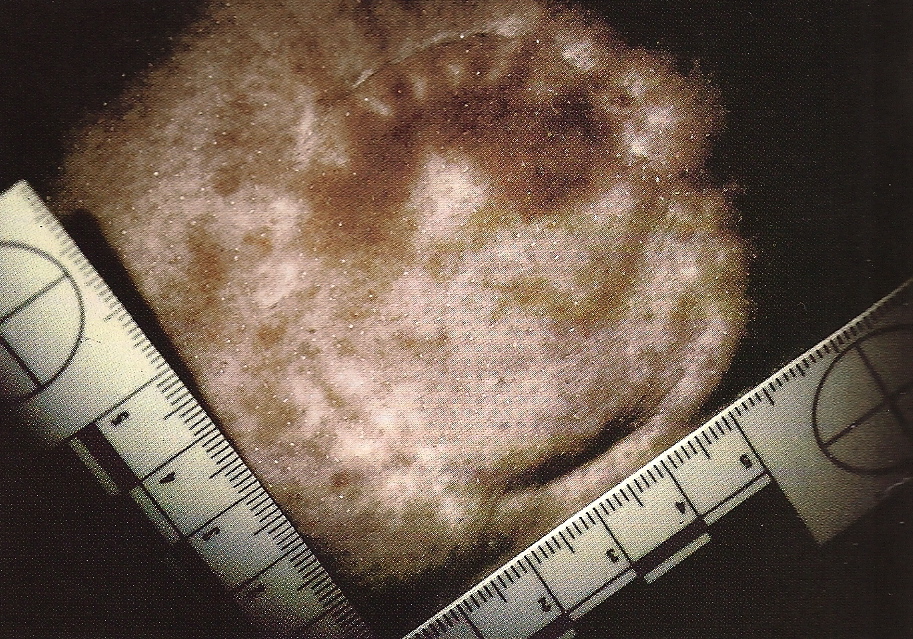
Last spring, I published a piece examining alternate light sources as a tool for semen and other bodily fluid detection. I promised I would come back with a piece on using ALS to identify and photograph injury not obvious or visible to the naked eye. Coincidentally I’ve been asked for some predicate questions by a prosecutor on this very issue, so in the spirit of bang for buck and all that, here you go:
Not surprisingly, there hasn’t been a ton written on this subject. I am including several links here, but unfortunately, they’re not all full-text. Some of these links don’t provide a guide for using ALS, so much as they support the use of ALS in the context of a broader approach to identifying injury. However, keep in mind: there is little research that supports using ALS for this purpose, so from an evidence-based standpoint you are out in the weeds. Be prepared to discuss this if one of your cases goes to court. (This is the kind of science I’m looking for on this subject, for those of you who have asked me.)
{My editorial here. Of note: “There is no evidence base, therefore, to support the use of an alternate light source as an independent tool to definitively interpret fluorescence as a sub- clinical bruise (i.e., bruising that is not visible to the naked eye). Given the high false-positive rate in detecting subclinical bruising, it is essential for medical and legal professionals to understand the resulting implications of promoting the use of ALS in a forensic setting.” (p. 5)}
Advances in Clinical Forensic Medicine
Alternative light source (polilight®) illumination with digital image analysis does not assist in determining the age of bruises
Enhancing the Visibility of Injuries with Narrow-Banded Beams of Light within the Visible Light Spectrum
Experience With Wood Lamp Illumination and Digital Photography in the Documentation of Bruises on Human Skin (full text)
Forensic Photography. Ultraviolet Imaging of Wounds on Skin
Forensic Ultraviolet Light in Clinical Practice: Evidence for the Evidence (full-text)
Marked Women (full-text)
Routine use of ultraviolet light in medicolegal examinations to evaluate stains and skin trauma
Soft Tissue Injuries in Victims of Color (Poster)
Spectrophotometric evaluation of the age of bruises in children: measuring changes in bruise color as an indicator of child physical abuse.
The Police Report Says He Choked Her–How Do I Prove It? (full text)
Use of an Alternate Light Source to Assess Strangulation Victims (full text for IAFN members and JFN subscribers)
 Bite wound viewed under ultraviolet light (Photo: Color Atlas of Domestic Violence)
The White Ribbon Campaign is a Canadian organization focusing on men stopping men’s violence against women. I am a big fan, no question. (Personal disclosure: I have their posters plastered all over my office. They’re fantastic.). The Pixel Project is hosting a webinar featuring one of their staffers as part of their Weekend Webinar series.
The Family Justice Center Alliance has a webinar on vicarious trauma coming up February 11th from 9-11am Pacific. As with all FJCA webinars, it’s free, but preregistration is a good idea.
I’ve been meaning to get a new clinical guide up, but this one has been a challenge. See, injury photography hasn’t been written up extensively in the literature. What is out there is by and large pretty old (you’ll see several Polaroid references in the resources I share). Still, all of these have something to offer forensic practice. As with everything I post, due diligence, please. Read through the materials and decide for yourself whether these are useful and relevant to your work. And if you have other resources and tools you like not already listed here, by all means send them on and I’ll be happy to include them with attribution.
I had an email yesterday about finding CEUs for forensic nurses, which made me think that it’s probably a good time to remind people about the free CEUs available online from IAFN. If you haven’t yet checked them, I encourage you to do so, because, did I mention they’re free (unless you’re not a member, then they’re $10 each)? And they’re specific to forensic nursing, which is tough to find. As you know, a lot of the CEs out there are either too simple or too tangential to our work, so offerings like these are invaluable.
JWI’s National Alliance to End Domestic Violence has a webinar coming up February 4th from 12-1 pm ET on substance abuse and domestic violence. Cost of the webinar is free for members, $25 for everyone else. Advanced registration is a good idea.
This week over at the sustainability site, a few goodies for your perusal:
I’d also like to draw your attention to the AEquitas site–we have a couple webinars coming up that might be of interest:
(You can see a complete list of our online and live trainings here.)
A quick thanks to everyone who contributed at the PIH site for medical assistance to Haiti–we were able to reach our goal without a problem.
It’s cold and gray here in the CLE: perfect for curling up in front of the fire with a good book and a glass of wine that incomplete book chapter you’ve been meaning to finish for one of your best friends. I guess you know where you’ll find me. Have a great weekend [and happy birthday, T!]
Prevention Connection is hosting a webinar on the That’s Not Cool campaign and their new Campaign Tools site. “That’s Not Cool focuses on preventing controlling or abusive behavior occurring within the digital universe – online, via cellphone, etc. – and encourages teens to draw their own lines about what is, or is not, acceptable relationship behavior. Since the January 2009 campaign launch, That’s Not Cool has engaged hundreds of thousands of teens in teen dating abuse prevention, both online and on-the-ground.”
OVC’s next web forum is on stalking in the workplace. The actual forum will be January 19th from 2-3pm ET, but you can submit questions ahead of time, and/or visit the site after the fact and read the responses to questions from other participants.
January 20th, EmployeeScreenIQ is hosting an interactive roundtable discussion via webinar on violence in the workplace. The session will be held from 2-3pm ET. Preregistration is required.
I keep putting this topic up on the site because I think it’s one area where forensic clinicians can really push our institutions to be accountable and proactive in creating policies on this issue. And when we look at the Spectrum of Prevention, it’s a great place for us to participate in the process (Changing Organizational Practices).
I am stranded at the CLE airport, where power went out 9 hours ago and has only just been restored. Needless to say, it’s chaos here, and the flight I was supposed to get on to go to Dallas has been cancelled. I’ve allegedly been rebooked for later tonight, so while I hang out to see whether I pissed off the travel gods that badly, I figured I’d get a post up.
I had the privilege of attending a focus group on victim intimidation with predominantly law enforcement professionals yesterday. As the only healthcare provider in the room, I was trying to impress upon the group that clinicians have a stake in victim intimidation, and that the healthcare implications are significant. Although people most often think of victim intimidation in organized crime and gang cases, we see it more often in DV, sexual assault, child abuse, and even elder abuse cases. Which leads us to this post, because I’m interested in a couple things:
 January is a pretty slow month for online events, but there are a couple of things I’d like to bring to your attention. The first is that January is stalking awareness month. You can find a wide variety of resources and ways to promote awareness at their dedicated site. One of the things I particularly like is their 31 Days of Status Updates (PDF), which gives you daily crafted messages to use for Facebook updates or Twitter messages.
JWI’s National Alliance to End Domestic Violence is hosting a webinar January 7th on partner stalking, from 12-1 pm ET. Cost to attend is $25 for non-members (free for members). TK Logan and Teri Feragher will be the featured speakers.
The Centers for Disease Control and Prevention is hosting a webinar December 16th at 1 pm ET: National and State-level Data on Intimate Partner Violence, Sexual Violence, and Stalking, presented by Michele Lynberg Black, PhD, MPH. Attendance is free, but pre-registration is required.